Riga Fashion Week SS27: Full Report
From October 20 to 24, Riga Fashion Week brought together established labels, emerging designers and fashion professionals from Latvia, Lithuania, Estonia, Poland, Italy and beyond. Across five days, the 43rd edition unfolded through runway shows, presentations, exhibitions and conversations at venues across the Latvian capital, from a waterfront runway on the Daugava to the halls of Hanzas Perons.
A sunset opening on the Daugava
The week opened at ExPorto marina, where a 100-metre wooden pier became the runway. Set against the Daugava, the sunset show introduced three distinct perspectives: Latvian designer Katrīna Ermanoviča, the UK- and Poland-based label Szczygiel, and Italian brand DEKEL. The waterfront setting gave the opening a distinctly Riga character while bringing together designers from across the international programme.
See the full photo gallery from the Riga Fashion Week SS27 opening.
International voices at Zunda Towers
The programme continued at Zunda Towers, with Estonian labels N-20 and Nora Isle and designer Birgit Peerna sharing the runway with DEKEL and designers Jakub Suchar, Miłosz Jatelnicki and Mateusz Jagodziński of Poland’s circular-fashion project Play Sustain. Alongside the shows, a professional discussion asked how emerging designers can be supported today. Representatives of Play Sustain, Estonia’s Estonian Fashion Festival and Vilnius Sustainable Fashion Week exchanged perspectives on creating opportunities for the next generation.
Hanzas Perons: established names and new collections
The main runway shows took place at Hanzas Perons on October 22 and 23. Latvian children’s fashion label Paade Mode marked its 15th anniversary with a special presentation. New collections from Lithuania’s Valldea, Szczygiel and Latvian premium outerwear label RainSisters followed; RainSisters’ debut runway was accompanied by a specially created rain installation.
The final show day brought established Latvian names together with a younger Baltic design generation. Collections were presented by Natalija Jansone, Lithuanian designer Marija Petraitė and Rimgailaite Costume, Katrīna Ermanoviča, BAE by Katya Shehurina and Sviests by Sergey Hatanzeisky. Valldea and Marija Petraitė stood out for their individual creative approaches, while BAE by Katya Shehurina’s presentation was shaped by choreography by Linda Kalniņa.
Ermanoviča’s collection, “Laikā zudis,” was shown exclusively by male models. At Rimgailaite Costume, “Clothes We Inherit” reworked household textiles, drawing attention to craft, material reuse and the continuing life of garments. These presentations offered distinct takes on identity, construction and the stories materials can carry.
Textile art, presentations and a citywide programme
Fashion Week extended beyond the runway. The Art Academy of Latvia opened “Šķetinātāji. Tekstila manifests,” an exhibition of contemporary textile art that treated textile as material, language and metaphor. The exhibition was scheduled to remain open to visitors until mid-November.
Latvian Design Stories presented work by Una Bērziņa, Hannes Rüütel, Leticija Orlova and Lithuanian label No More Accessories. Separate presentations for media and industry professionals introduced new work by Iveta Vecmane, Uzbek label Moel Bosh and Keymono, created by Gundega Duduma. Together, the exhibitions and presentations widened the week’s view of fashion into design, material practice and creative exchange.
Closing the 43rd edition
On the closing day, visitors were invited to explore Latvian designers’ studios and shops, along with special offers around the city. A model awards ceremony recognised four models as the autumn session’s most requested: Melissa Pudenko of Deam, Margarita Taurine of Freyja Model Management, Patrīcija Boleviča of Idol and Ketrina Kabakova of MOON Models. The evening ended with a party at Coyote Fly, Riga Fashion Week’s official club.
Across five days, Riga Fashion Week SS27 connected Baltic and international designers through runway presentations, professional dialogue and cultural programming. From ExPorto’s wooden pier to the exhibition spaces and studios around Riga, the 43rd edition presented fashion as both a platform for new collections and a meeting point for the region’s creative community.
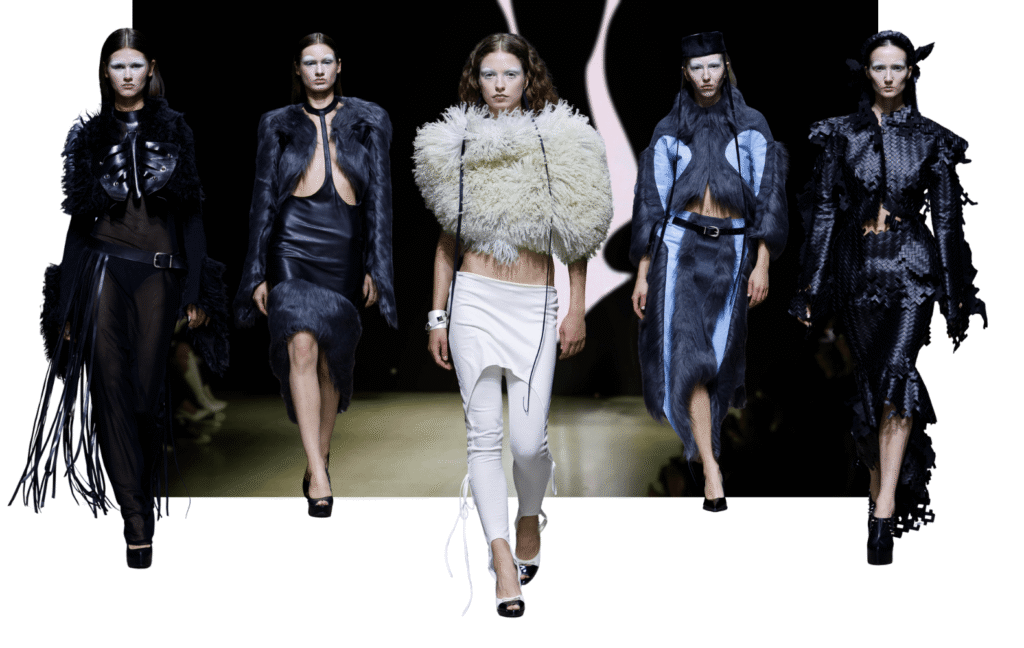
Valldea
“OIL”: Inspired by oil as “black gold,” the collection translates its fluid movement and hidden energy into draped silhouettes, fine silk, wool and dense knitwear. Deep black and inky tones give the looks a sense of raw power and quiet elegance.
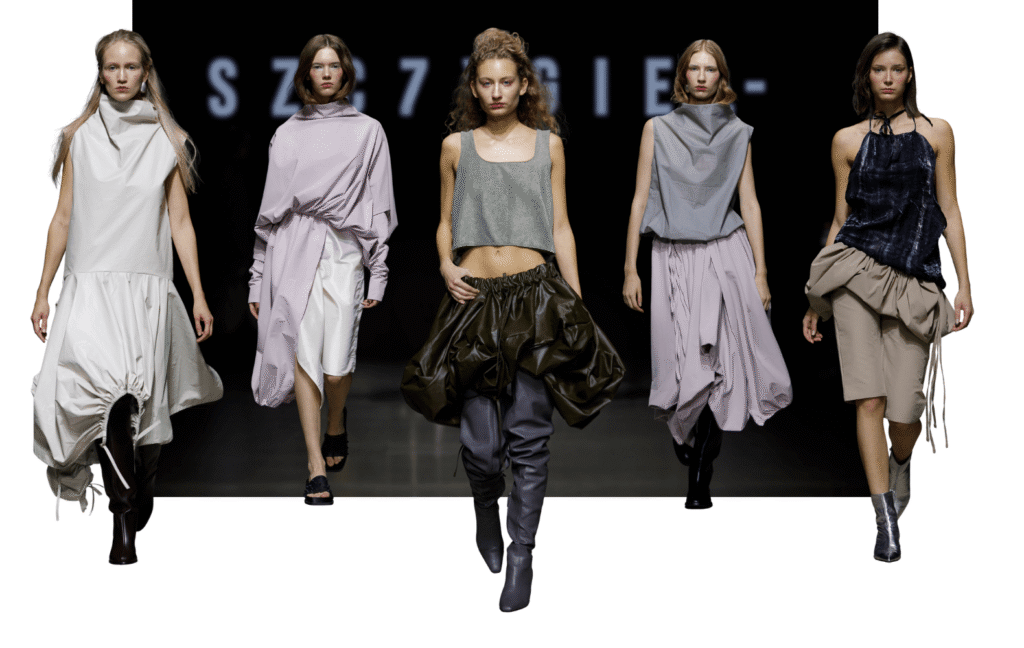
Szczygiel
“The New Woman of the Castle”: A contemporary woman on Scotland’s Isle of Skye inspires this blend of aristocratic heritage and modern dressing. Misty hues, graphite and peatland tones meet the designer’s upcycled fabrics and slow-fashion approach.
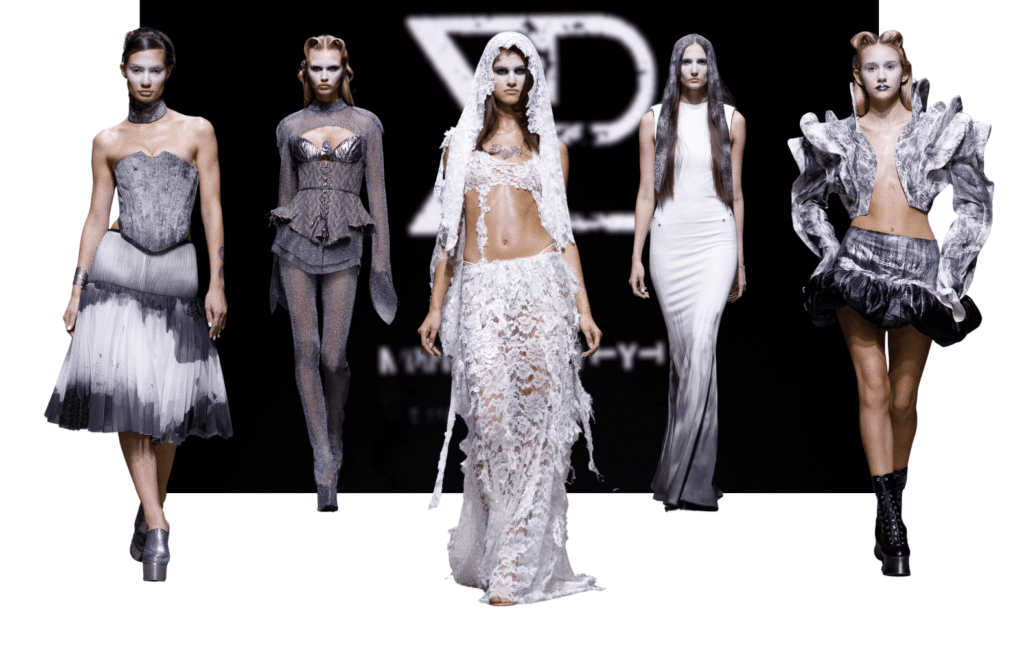
Maria Petraityte
“Re_Imagine_Distance”: Reworking earlier creations as part of a personal journey, Petraitė blends historical romanticism, avant-garde ideas and futurism. Experimental takes on corsetry and classic silhouettes make each look feel like both a garment and a small theatrical object.
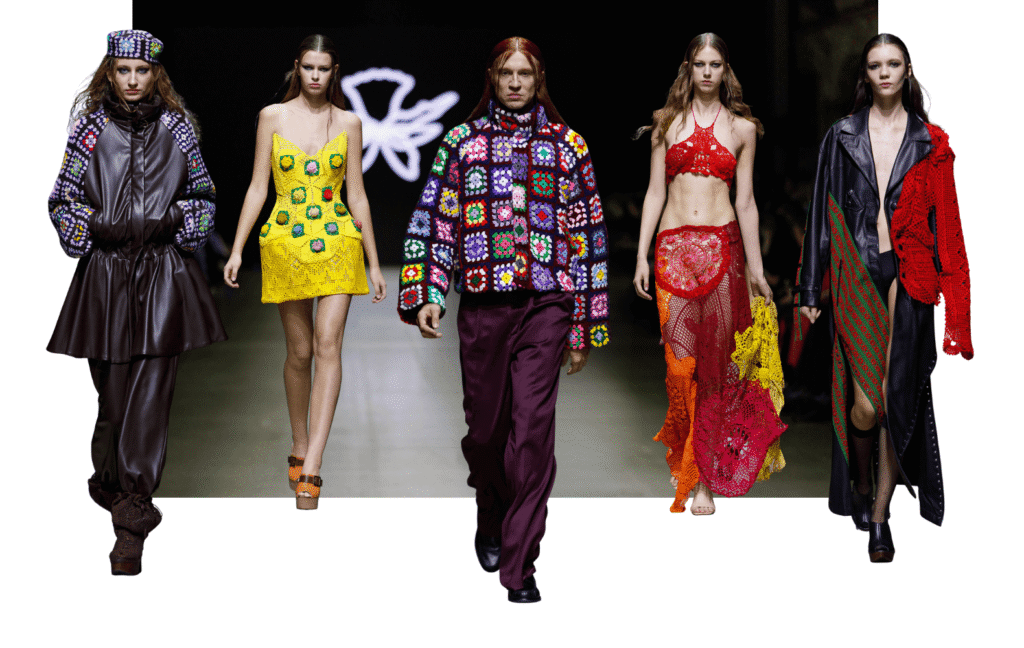
Rimgailaite Costume
“Clothes We Inherit”: Created with Humana Lietuva, the collection gives pre-loved blankets and bed linen new life as one-of-a-kind ensembles. Sculptural construction makes room for both special occasions and everyday wear.
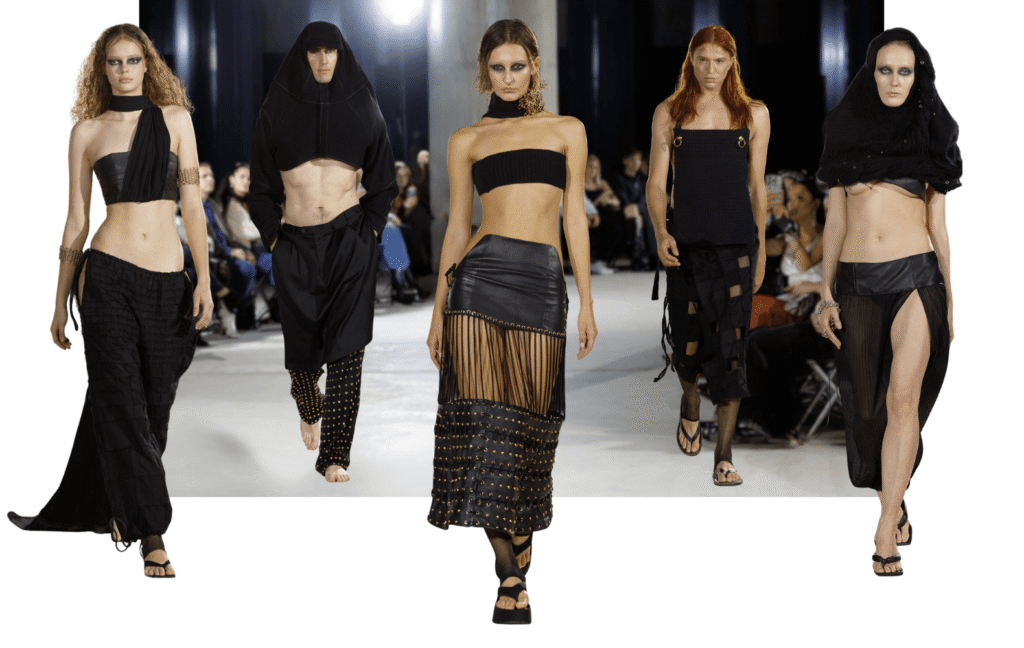
Mateusz Jagodziński
Drawing on the Japanese art of kintsugi, the collection treats repair as a form of renewal. Second-hand clothes, deadstock and leftover costume materials are transformed through crochet, pleating and patchwork, with black and gold accents.
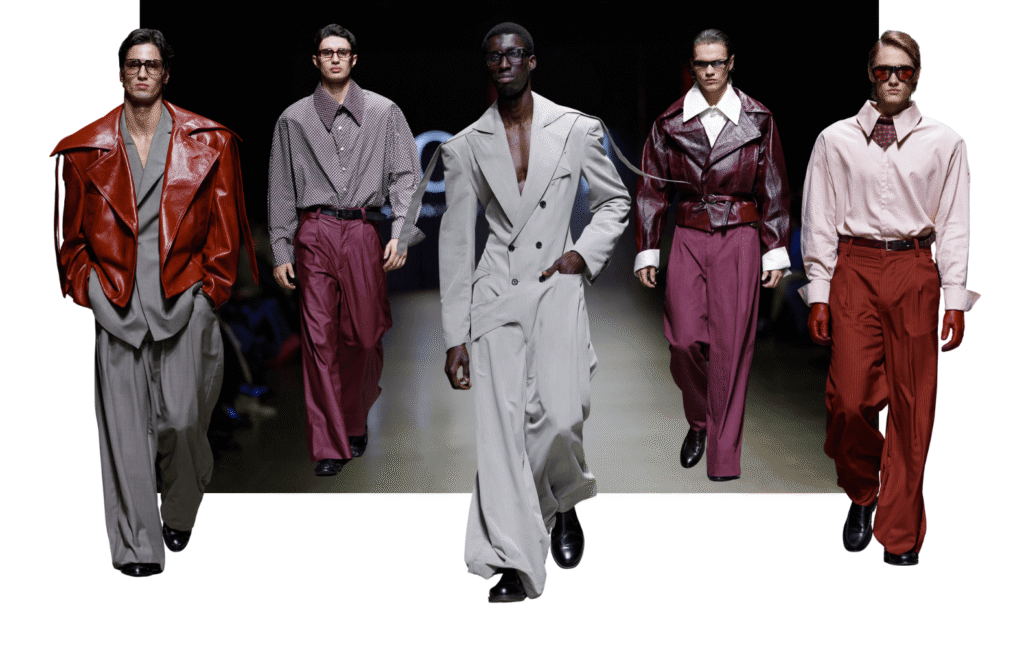
Katrina Ermanoviča
“Le Passager du Passé”: This collection follows an aviator from another era who finds himself in the present. Timeless silhouettes, natural fabrics and thoughtful tailoring bring the story to life, with subtle theatrical details woven into the clothes.
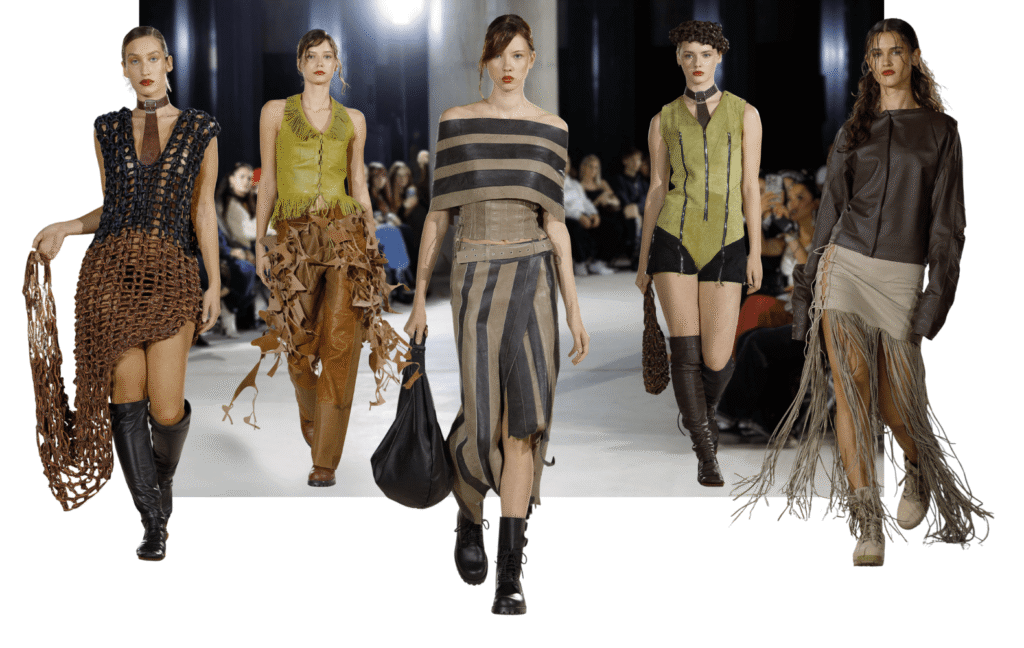
N20_STUDIO
By Birgit Peerna & Helen-Mary Vartšun
“x, y”: Birgit Peerna and Helen-Mary Vartšun build on contrasting design approaches, working with leather offcuts from Estonian producers. Knitting, perforation, fringing, lacing and weaving turn leftover material into contemporary wearable pieces.
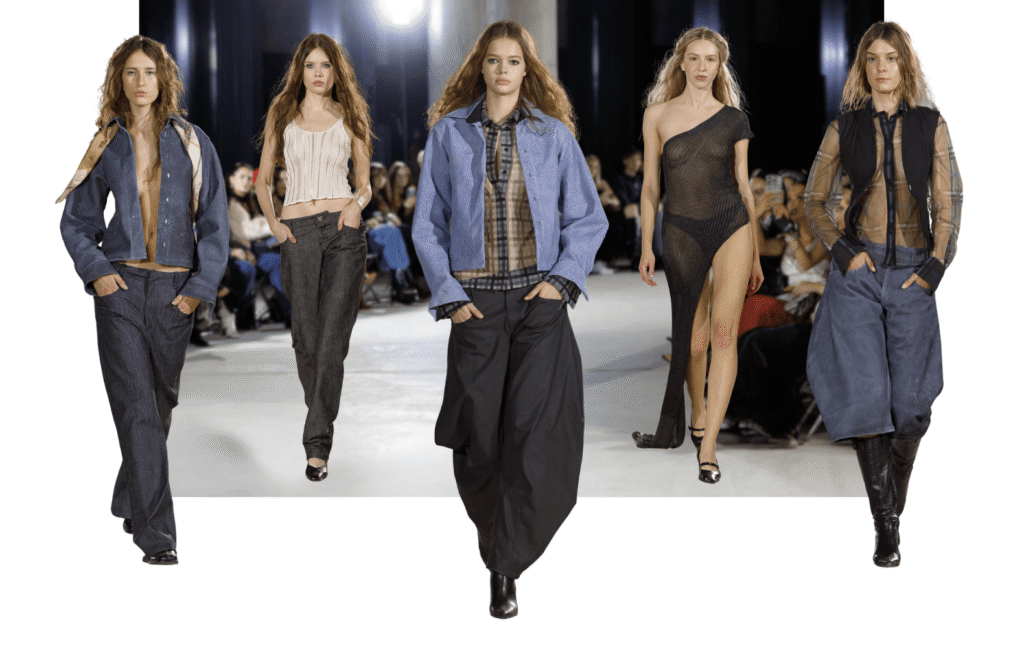
Dekel
Nostalgia, memory and identity shape Dekel’s emotionally driven designs. Each collection turns personal memories into contemporary forms, balancing elegance with raw expression and treating fashion as a form of storytelling.
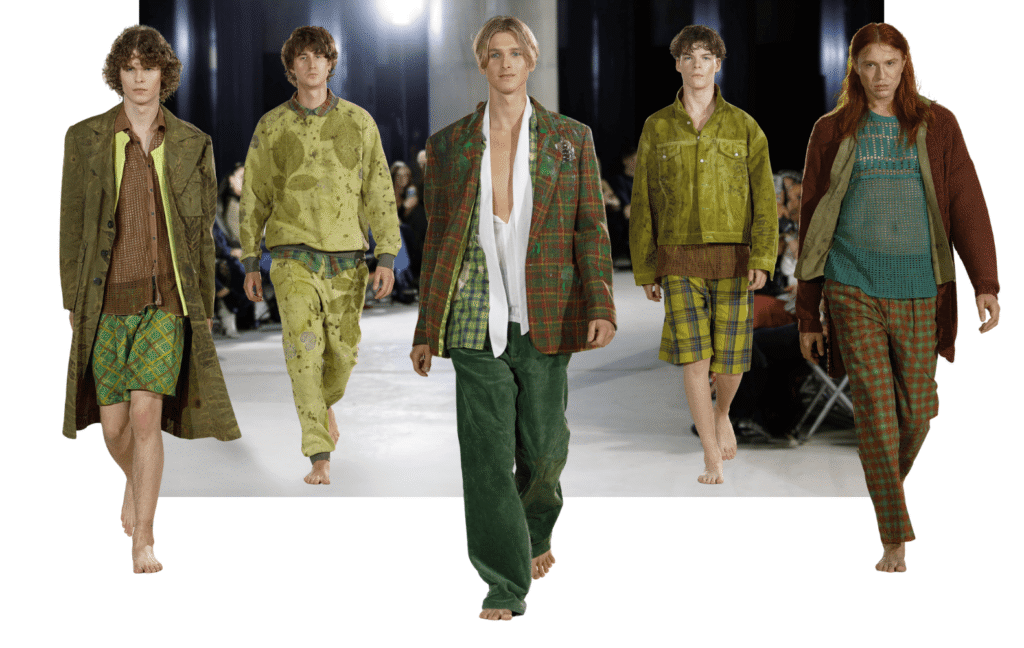
Jakub Suchara
“Feszter”: Inspired by forests and the people, plants and animals within them, the collection uses natural colours, botanical prints and reclaimed fabrics. Reused household textiles sit alongside natural fibres in a study of circular fashion.
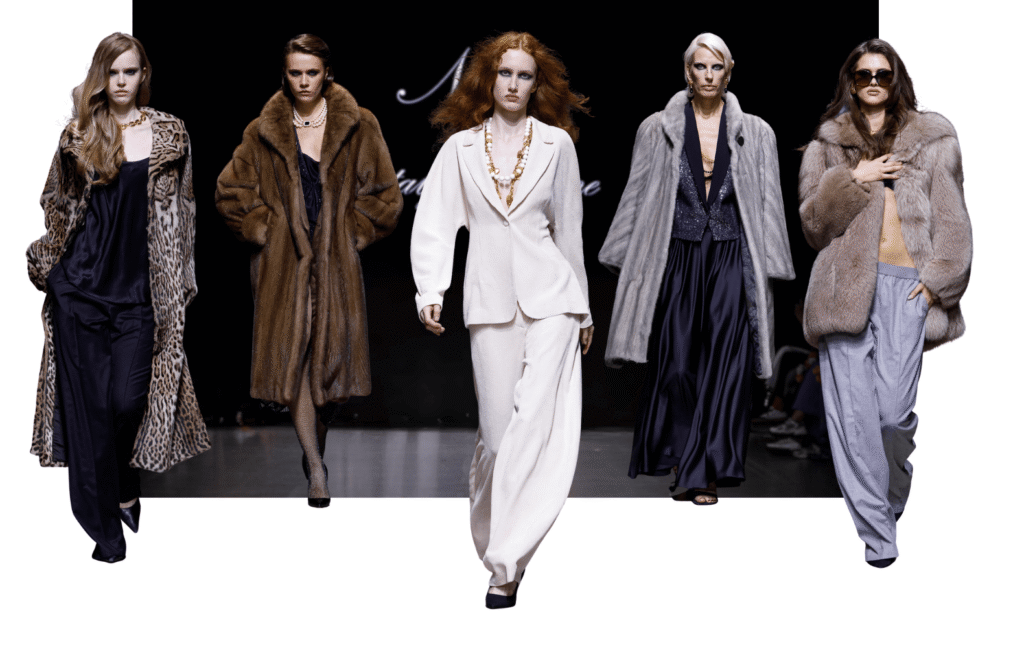
Natalija Jansone
“OIL”: Inspired by oil as “black gold,” the collection translates its fluid movement and hidden energy into draped silhouettes, fine silk, wool and dense knitwear. Deep black and inky tones give the looks a sense of raw power and quiet elegance.
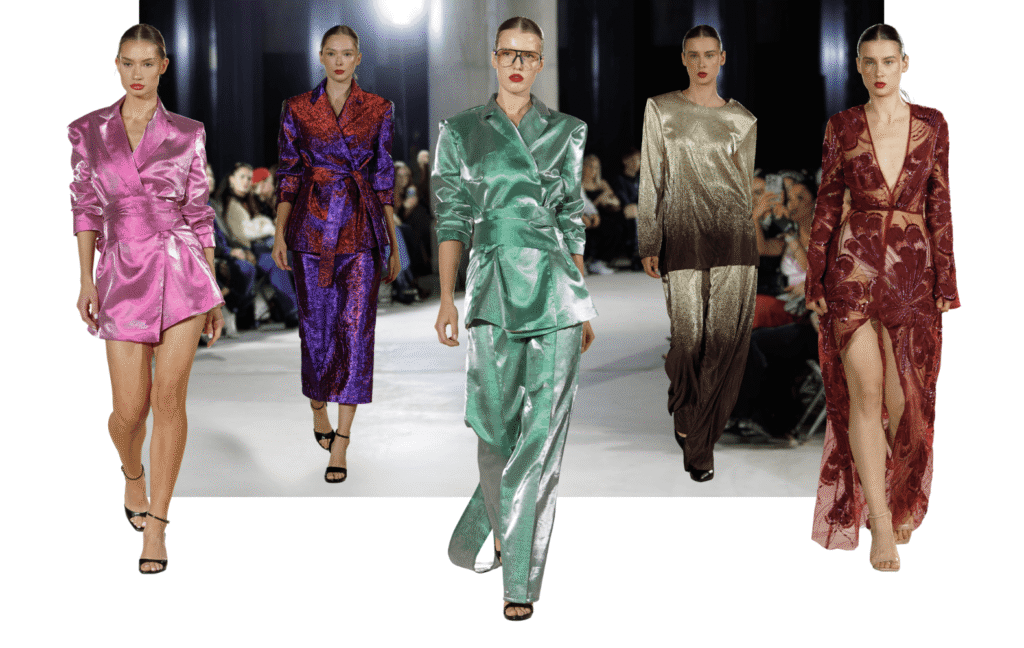
Nor Isle
Classic silhouettes meet unexpected textures, shine and tactile surfaces. The collection plays with softness and strength, minimalism and expressive detail, creating statement pieces designed to remain wearable.
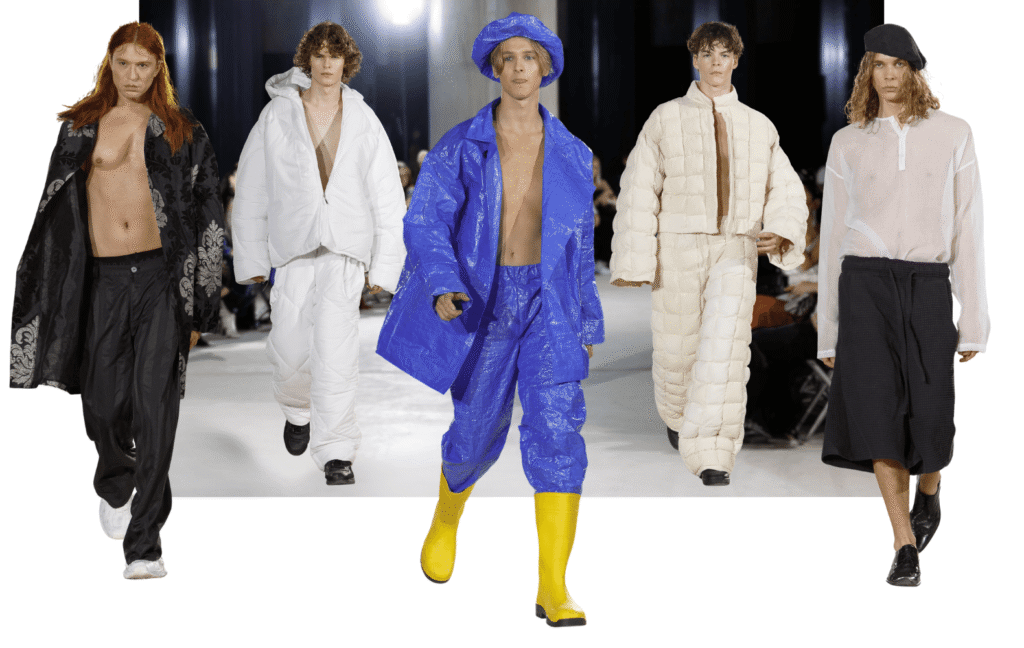
Miłosz Jatelnicki
Jatelnicki’s first collection explores sustainable fashion through reuse. Curtains, bedding, tote bags and other everyday materials are transformed into new clothing, showing how familiar objects can take on a fresh purpose.
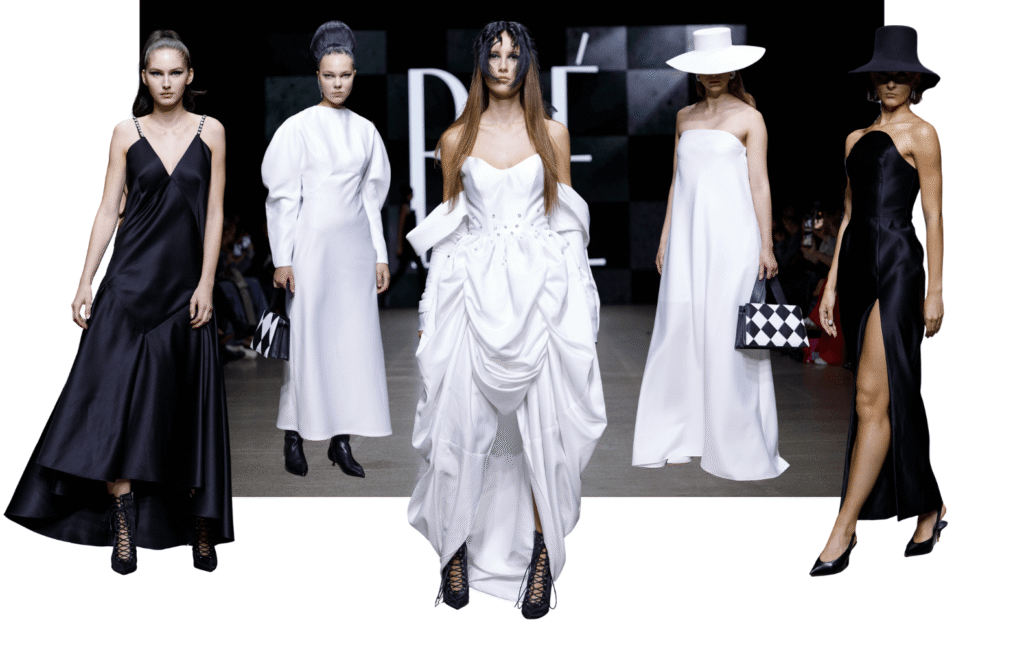
BAE by Katya Shehurina
“The Game”: Black and white form the base of a collection built around contrast and personal expression. Removable accessories let each wearer change a dress’s character, turning getting dressed into a creative game.
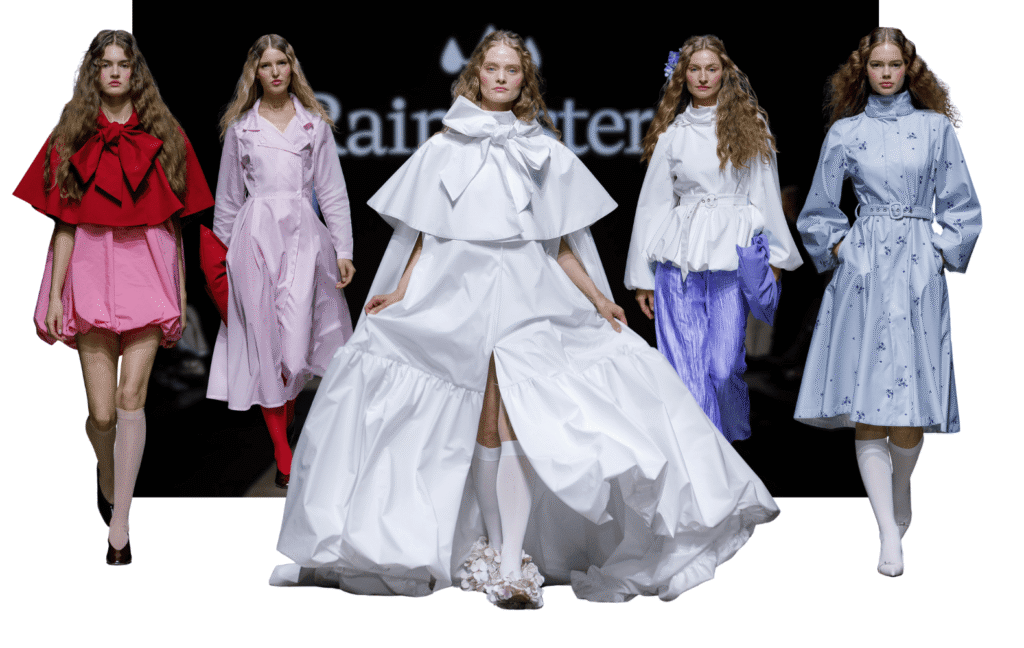
RainSisters
The collection presents rainwear as expressive everyday fashion, combining practical protection with bold colours, prints and feminine silhouettes. Designed for changing weather, the pieces bring personality and a sense of play to functional outerwear.
PHOTO: Riga Fashion Week
by Mark Litvyakov and Toms Norde