
Riga Fashion Week AW26/27: Full Report
The 42nd Riga Fashion Week Concludes with a Celebration of Creativity, Sustainability and International Dialogue
From April 14 to 18, Riga once again became the fashion capital of the Baltics as Riga Fashion Week Autumn/Winter 2026/2027 presented its 42nd season. Over five dynamic days, the Latvian capital hosted runway shows, exhibitions, educational initiatives and a vibrant social calendar, reaffirming the event’s role as the most significant fashion platform in the region.
Bringing together designers, industry professionals, international media and fashion enthusiasts, this season showcased not only the latest AW26/27 collections, but also the growing influence of Baltic fashion on the global stage. Sustainability, craftsmanship and cultural exchange emerged as the defining themes of the week.
The official opening took place at The Benjamin House, where invited guests gathered for a ceremonial reception marking the start of the event. During the evening, stylists and photographers whose work has shaped the visual identity of recent seasons were recognized for their contributions.
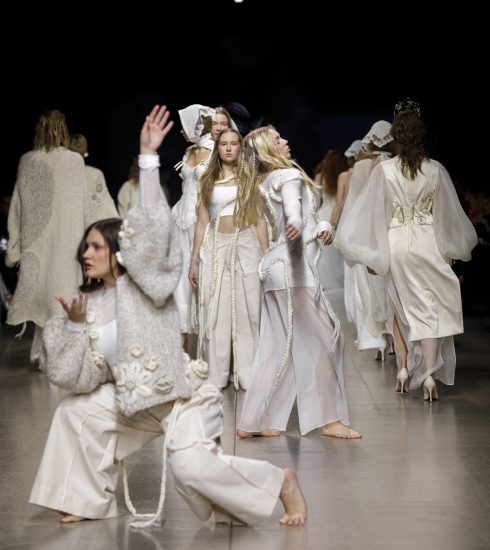
The main runway presentations were held at Verde and Hanzas Perons, two venues that provided contrasting yet complementary settings for the season’s collections. In total, 18 designers took part in the official show schedule, representing Latvia and a diverse range of international perspectives.
Among the Latvian participants were Anna Kruz, BAÉ by Katya Shehurina, Iveta Vecmane, Katya Katya, Natalija Jansone, Studio MX, Sviests by Sergey Hatanzeisky, Una Berzina and Verens. International designers included Hannes Rüütel, Laura Daili, Lilija Klim-Larionova, Paul Williams Atelier and A.Cont.
Additional presentations took place at Latvian Design Stories / Butterman, where Novaliss, Annaelizabete.Fashion and Lyuiize unveiled their latest collections in a more intimate format.
A strong emphasis on responsible design was evident throughout the week. At Treimane Studio, a dedicated sustainability program featured the presentation of an eco-focused collection, public workshops on creating decorative accessories and handbags, and an evening event that brought together creative professionals and conscious consumers.
Sustainable fashion also took center stage in the panel discussion “Sustainable Fashion: A Niche or the Future?”, which explored responsible production, material innovation and the growing importance of environmentally conscious practices within the industry.
The cultural program enriched the fashion week experience with several notable exhibitions. At Ola Foundation, visitors viewed the photography exhibition “Asnate Smeltere. Continuity.” The Latvian National Museum of Art presented “From Art Deco to the Present Day. Design and Craftsmanship in France”, while international journalists were given a preview of “Celebrity Wardrobes” at the Riga Fashion Museum.
On the final day, local designers welcomed visitors to their boutiques and studios with special activities and promotions, creating a direct connection between creators and fashion lovers.
As always, the social program played a central role in the Riga Fashion Week experience. Events took place at TRIBE Riga City Centre and Pullman Riga Old Town. Following the closing runway show, guests continued the celebration at the official Riga Fashion Week club, Coyote Fly, before the season concluded with a private model awards ceremony at ICON Cocktail & Hookah Lounge.
Supported by partners including Livland, the State Culture Capital Foundation, the Riga City Council, the Investment and Development Agency of Latvia and Live Riga, the 42nd season of Riga Fashion Week once again demonstrated why the event remains an essential meeting point for creativity, innovation and international collaboration in Baltic fashion.

Verens
Verens explored individuality within human relationships in You and Me, a collection that examined how two distinct identities coexist, influence and complement one another. This conceptual starting point was translated into layered silhouettes and contrasting textures that balanced intimacy with independence.
A signature element of the brand — asymmetrical knitted vests — served as the foundation of the collection. Technical outerwear fabrics were combined with corduroy, velvet and wool lace, creating richly textured looks that moved between structure and softness. Smooth silk and cotton tops introduced subtle color accents and lightness.
The collection also showcased technically intricate pieces, including knitted shorts that transformed into trousers, underscoring the designer’s interest in multifunctionality and innovation. Leather jackets, oversized knitwear and sharply tailored separates added further depth to the wardrobe.
On the runway, earthy browns and soft neutrals were punctuated by vivid flashes of pink, yellow and green, lending the collection a playful energy. Floral motifs and whimsical styling introduced a romantic note, while the underlying construction remained precise and thoughtfully engineered. With You and Me, Verens offered a nuanced and highly wearable meditation on connection, contrast and self-expression.

Anna Kruz
Anna Kruz reaffirmed her mastery of leather craftsmanship with a collection that celebrated confident femininity and enduring quality. Working with natural leather for more than a decade and maintaining close partnerships with Italian manufacturers, the Latvian designer continues to build her collections on the principles of durability, precision and timeless elegance.
This season, supple leather was paired with the rich texture of llama wool, creating a tactile contrast between sleek surfaces and soft volume. Flowing lines softened the architectural silhouettes, while deep, earthy tones and striking olive-green accents brought intensity and modern sophistication to the runway.
The collection featured sharply tailored trench coats, fitted dresses, structured separates and dramatic fur-like details that added movement and visual impact. Oversized sunglasses and sculptural accessories reinforced the strong, self-assured mood of the presentation.
Designed for a woman who is fully confident in both her strength and femininity, Anna Kruz’s latest collection balanced power with sensuality. The result was polished, expressive and unmistakably luxurious — a compelling statement on the enduring appeal of expertly crafted leather.
@annakruz_official

Iveta Vecmane
Iveta Vecmane presented one of the most dramatic and psychologically charged collections of the season with Melancholia XV: Morphine. Referencing both Morpheus, the ancient Greek god of dreams, and morphine, the pain-relieving substance associated with detachment, the collection explored the tension between external composure and an inner world that remains concealed.
This duality was expressed through a sharply defined visual language built around black and white, punctuated by striking accents of red. Tailored pinstripe suits, structured jackets, leather skirts and high-slit silhouettes created a compelling interplay between discipline and sensual exposure.
For the first time, lace appeared in the designer’s work as a structural element, adding a new layer of delicacy and complexity to her signature aesthetic. The contrast between rigid tailoring and transparent details heightened the collection’s emotional intensity.
The runway presentation conveyed a powerful image of a woman who is self-possessed and precise, yet carries an undercurrent of mystery and vulnerability. With Melancholia XV: Morphine, Iveta Vecmane delivered a sophisticated and cinematic collection that balanced restraint, seduction and psychological depth.
@ivetavecmane

Laura Daili
Laura Daili transformed fragility into a powerful visual statement with Invisible Tension, a collection inspired by the symbolic and physical properties of glass. Referencing the proverb “broken glass brings good luck,” the Lithuanian designer explored the delicate balance between vulnerability and inner strength.
Transparent, layered silhouettes echoed the angular forms of shattered glass, while recycled window glass was incorporated into structural corsets, accessories and embroidered details. These elements were not concealed but intentionally highlighted, becoming integral parts of the garments and reinforcing the collection’s central narrative.
Minimal red accents punctuated a palette dominated by icy mint, black and soft neutrals, drawing attention to the exposed and vulnerable aspects of the body. Colored plastic bags were transformed into lightweight, fur-like textures, introducing an inventive and unexpected material contrast.
Combining sculptural construction with conceptual clarity, Invisible Tension demonstrated Laura Daili’s talent for turning unconventional materials into refined, emotionally charged fashion. The result was a collection that felt both sharp and ethereal, balancing precision with poetic expression.
@lauradali

Hannes Rüütel
Hannes Rüütel explored the interplay between tenderness and structure in a collection that juxtaposed softness with control. The Estonian designer continued to refine his distinctive approach to gender-fluid fashion, presenting a wardrobe that balanced emotional nuance with crisp tailoring.
Lightweight fabrics, bows and flowing materials introduced fluidity and movement, while cotton suiting, fine stripes and contrast stitching added clarity and architectural precision. Decorative cherry motifs appeared throughout the collection, lending a subtle sense of nostalgia and youthful charm.
The color palette moved confidently between powder pink, apple green, sky blue, warm camel and vibrant red, creating a fresh and playful rhythm. Relaxed trousers, softly structured jackets, knitwear and skirts formed silhouettes that felt both familiar and gently subversive.
This season also marked an expansion of the brand’s universe with the introduction of womenswear alongside its established menswear line. By blurring conventional boundaries with ease and sophistication, Hannes Rüütel delivered a collection that was thoughtful, modern and full of quiet personality.
@hannesruutel

BAÉ by Katya Shehurina
BAÉ by Katya Shehurina presented Precision Line, a striking collaboration with Adidas Baltic that reimagined the visual codes of sportswear through the lens of architectural tailoring and contemporary femininity. Built on the principles of upcycling, the collection transformed existing garments and materials into a refined series of sculptural dresses and separates.
Signature adidas elements — iconic three stripes, performance fabrics and technical trims — were seamlessly integrated into new silhouettes. Slip dresses edged with lace, corseted gowns and sharply cut mini dresses were juxtaposed with recognizable athletic details, creating a compelling dialogue between elegance and utility.
The collection balanced precision and softness. Defined waists, elongated proportions and structured construction were offset by fluid draping and layered textures that introduced movement and depth. A palette of black, white, blush pink and vivid red underscored the contrast between romanticism and sport-inspired functionality.
Produced in Latvia and guided by zero-waste principles, Precision Line demonstrated how existing materials can be elevated into sophisticated fashion statements. BAÉ by Katya Shehurina offered one of the season’s most memorable collaborations, proving that couture sensibility and sportswear heritage can coexist with remarkable ease.
@bae.special.moments

Lilija Klim-Larionova
Lilija Klim-Larionova on Instagram presented a collection inspired by the atmosphere of Rome’s Monti district, where eclectic street style meets the refined architecture and cultural depth of centuries-old traditions. This dialogue between spontaneity and sophistication became the conceptual foundation of the collection.
The visual language was built on contrast and eclecticism, expressed through nuanced combinations of materials and textures. Delicate silk was paired with dense wool, creating a subtle balance between lightness and warmth. The collection included dresses, jackets, coats, raincoats, jumpsuits and elongated vests, each designed with an emphasis on fluid layering and architectural form.
The color palette was rooted in deep blacks, browns and earthy tones, complemented by white, sand and soft light grey, with occasional accent colors adding unexpected vibrancy. These restrained yet expressive combinations reinforced the collection’s elegant and cosmopolitan character.
Inspired by one of Rome’s most atmospheric neighborhoods, Lilija Klim-Larionova created a wardrobe that merged urban practicality with artistic refinement. The result was a sophisticated and versatile collection that translated the spirit of modern European style into contemporary fashion.
@lilija_larionova_designer

SVIESTS by Sergey Hatanzeisky
SVIESTS by Sergey Hatanzeisky presented a collection built around the concept FFC — Focus, Fight, Control. The idea explores a state of maximum concentration and the decisive moment before action, when body, emotions and movement are held in complete control.
The visual language of the show drew on the aesthetics of sport and combat disciplines, including boxing, kickboxing and training practices. Themes of confrontation, inner struggle and the tension before impact shaped the dramatic structure of the collection. The runway scenography reinforced this atmosphere through references to the training environment, incorporating ring ropes, punching bags and sharp lighting accents.
At the same time, the garments translated athletic references into a playful and highly contemporary wardrobe. Striped T-shirts, relaxed trousers and bold color combinations created an energetic rhythm, while ironic styling and casual silhouettes gave the collection a youthful and expressive character.
By combining the discipline and intensity of combat sports with streetwear sensibility, Sergey Hatanzeisky created a collection that captured the emotional charge of competition and transformed it into a vivid statement of individuality and self-control.
@sviests911

Paul Williams Atelier
Paul Williams Atelier presented one of the most emotionally resonant collections of the season with Between Here and Home, a thoughtful exploration of migration, identity and belonging. Drawing from the designer’s personal journey from Nigeria to the United Kingdom, the collection reflected the liminal space between departure and arrival, and the enduring connection to one’s cultural roots.
The silhouettes balanced structure and fluidity, with softened tailoring and relaxed proportions that conveyed both elegance and ease. Textured jacquard fabrics played a central role, creating a tactile surface that evoked weathered landscapes and memories shaped over time.
The color palette was restrained yet evocative, moving through earthy browns, sandy neutrals, muted turquoise and softly aged metallic tones. These shades underscored the collection’s contemplative mood and reinforced its sense of grounded sophistication.
Equally important was the brand’s commitment to longevity and responsible craftsmanship. Designed with comfort, durability and the principles of slow fashion in mind, the collection offered garments intended to be worn and treasured over time. With Between Here and Home, Paul Williams Atelier transformed a deeply personal story into a universally relevant meditation on movement, memory and the meaning of home.
@paulwilliams.ng

A.Cont
A.Cont presented Sinapsis, one of the most conceptual and experimental collections of the season. Drawing inspiration from the invisible networks that connect human beings, the collection explored the parallels between artistic thinking and neuroscience, transforming abstract ideas into highly tactile, sculptural garments.
The designer worked with materials in their most natural state, including unspun mohair that was manually transformed into elongated strands and felted textures. Cotton and silicone elements shaped with catalysts added an unexpected technical dimension, while handcrafted techniques emphasized the physicality and individuality of each piece.
The silhouettes were dramatic and often ethereal, combining transparency with cocoon-like forms and intricate surface treatments. Delicate webs of fiber appeared to grow organically around the body, creating garments that felt both fragile and powerful. Soft pink accents punctuated an otherwise muted palette, introducing moments of warmth and contrast.
Balancing functionality with artistic experimentation, Sinapsis blurred the boundary between fashion, textile art and wearable sculpture. A.Cont delivered a compelling meditation on connection and transformation, offering one of the most avant-garde statements of Riga Fashion Week Autumn/Winter 2026/2027.
@apuntocont__________

Studio MX
Studio MX explored the delicate tension between darkness and illumination in Noctiluca, a collection whose title combines the Latin words nox (night) and lux (light). Inspired by the translucent beauty of jellyfish and the spiral architecture of seashells, the collection transformed marine forms into a sophisticated study of silhouette, proportion and movement.
The garments emphasized the architecture of the body. Corsets served as the structural core of many looks, around which voluminous drapery and fluid layers unfolded. Black and white formed the conceptual foundation of the collection, highlighting sculptural shapes, while pale blush tones introduced softness and a sense of fragility.
A rich interplay of materials added depth and contrast. Tweed and leather provided structure and precision, while chiffon created transparency and motion. Pearls and crystal embellishments acted as luminous accents, echoing the shimmering glow suggested by the collection’s title.
Balancing ready-to-wear with couture techniques, Studio MX presented garments that felt both wearable and highly artistic. With Noctiluca, the Latvian brand offered a compelling vision of contemporary femininity, where strength and delicacy coexist in perfect equilibrium.
@studio__mx

Natalija Jansone
Natalija Jansone presented a collection built around the idea of lightness of movement and modern femininity. Designed as a “second skin,” the garments followed the body’s natural motion, combining comfort and elegance with the brand’s signature understated sophistication.
Clean lines and carefully considered silhouettes were paired with fluid forms and lightweight fabrics, creating a wardrobe that felt effortless yet refined. Structured jackets and vests, relaxed trousers, softly tailored skirts and dresses emphasized the waist while maintaining a sense of ease. Silk, cotton, viscose and lightweight wool enhanced the natural drape and movement of the garments.
The palette centered on soft and wearable tones, including silver grey, milky white, sky blue, graphite and warm browns. These muted shades underscored the collection’s calm, polished aesthetic and timeless appeal.
Adding an unexpected layer of wit, the runway was styled with an ironic, doll-like concept. Models appeared in voluminous wigs, oversized bows and dramatic false eyelashes, transforming them into fashion dolls and creating a playful contrast with the collection’s practical elegance. The result was both visually striking and subtly humorous, demonstrating Natalija Jansone’s ability to balance functionality with a distinctive artistic vision.
@natajanson

Una Berzina
Una Berzina continued her poetic exploration of memory and emotion with Stories. Part 5, a collection inspired by the fragile state between sleep and wakefulness. Drawing on the fairy tale of Sleeping Beauty, the designer translated the moment of awakening into a romantic and deeply atmospheric wardrobe, where perception remains soft, blurred and suspended in time.
The collection’s visual language was rooted in craftsmanship. Embroidery, hand knitting and delicately printed fabrics created a sense of intimacy and tactility, emphasizing the value of traditional techniques and slower, more thoughtful production. Floral motifs, lace details and cascading ruffles evoked vintage bed linens and heirloom textiles, reinforcing the dreamlike narrative.
While maintaining the brand’s signature monochrome aesthetic, Una Berzina introduced subtle powder-blue tones that brought freshness and lightness to the runway. Quilted outerwear, voluminous knitwear and flowing dresses combined comfort with theatrical elegance, suggesting garments designed both for rest and reverie.
Committed to sustainable principles, the brand continues to produce locally in Latvia using responsible materials and zero-waste practices. With Stories. Part 5, Una Berzina delivered one of the season’s most lyrical collections — a tender meditation on awakening, femininity and the beauty of handcrafted detail.
@una_berzina_fashion

Katya Katya
Katya Katya presented Moments of Forever, a couture-inspired bridal collection that reimagined contemporary wedding fashion through an architectural and deeply romantic lens. Known for her ethereal aesthetic, the designer elevated her signature craftsmanship with sculptural silhouettes and exquisite detailing.
Graphic corded lace, voluminous motifs and sheer structures formed the foundation of the collection, combining historical references with a distinctly modern sensibility. Regal proportions and subtle gothic accents introduced a sense of drama, while delicate handwork preserved the softness and femininity that define the brand.
The gowns were designed for brides with a clear vision of their wedding day look — women seeking both elegance and individuality. Many of the dresses featured transformable elements, allowing the silhouette and styling to evolve throughout the celebration.
With its intricate construction, refined textures and timeless beauty, Moments of Forever captured the emotional significance of bridal fashion. Katya Katya delivered a collection that felt simultaneously classic and contemporary, offering a poetic interpretation of romance for the modern bride.
@katyakatyalondon
Together, these collections demonstrate the diversity and maturity of contemporary Latvian fashion. They reflect a design culture that values both conceptual depth and technical excellence, where garments become a medium for storytelling and self-expression.
From avant-garde experimentation to wearable elegance, the featured designers show that Latvian fashion is not defined by a single aesthetic, but by a shared commitment to authenticity, craftsmanship and innovation. Sustainability, careful material selection and local production remain essential values, reinforcing the connection between creative vision and responsible practice.
This edition celebrates designers who challenge conventions while honoring tradition, proving that Latvian fashion continues to grow as a vibrant and distinctive voice within the international fashion landscape.
PHOTO: Riga Fashion Week
by Mark Litvyakov and Toms Norde